• Santa Maria
  • São Miguel
  • |
  • Terceira
  • Pico
  • Faial
  • São Jorge
  • Graciosa
  • |
  • Flores
  • Corvo
Destinazores
  • INÍCIO
  • VIAJAR
    • TOURS MULTI-ILHA
    • TOURS EM GRUPO
    • NATUREZA
  • TRILHOS
  • O ARQUIPÉLAGO
    • AS ILHAS
    • HISTÓRIA
    • ATIVIDADE ECONÓMICA
    • GEOMORFOLOGIA
    • CLIMA
    • FAUNA
    • FLORA
  • EXPERIÊNCIAS
    • ENTRETENIMENTO
    • GASTRONOMIA
    • ARTE POPULAR
    • FESTAS DOS AÇORES
    • GOLFE
    • WHALE WATCHING
  • MEDIA


LOCAIS A VISITAR | SPOTS TO VISIT
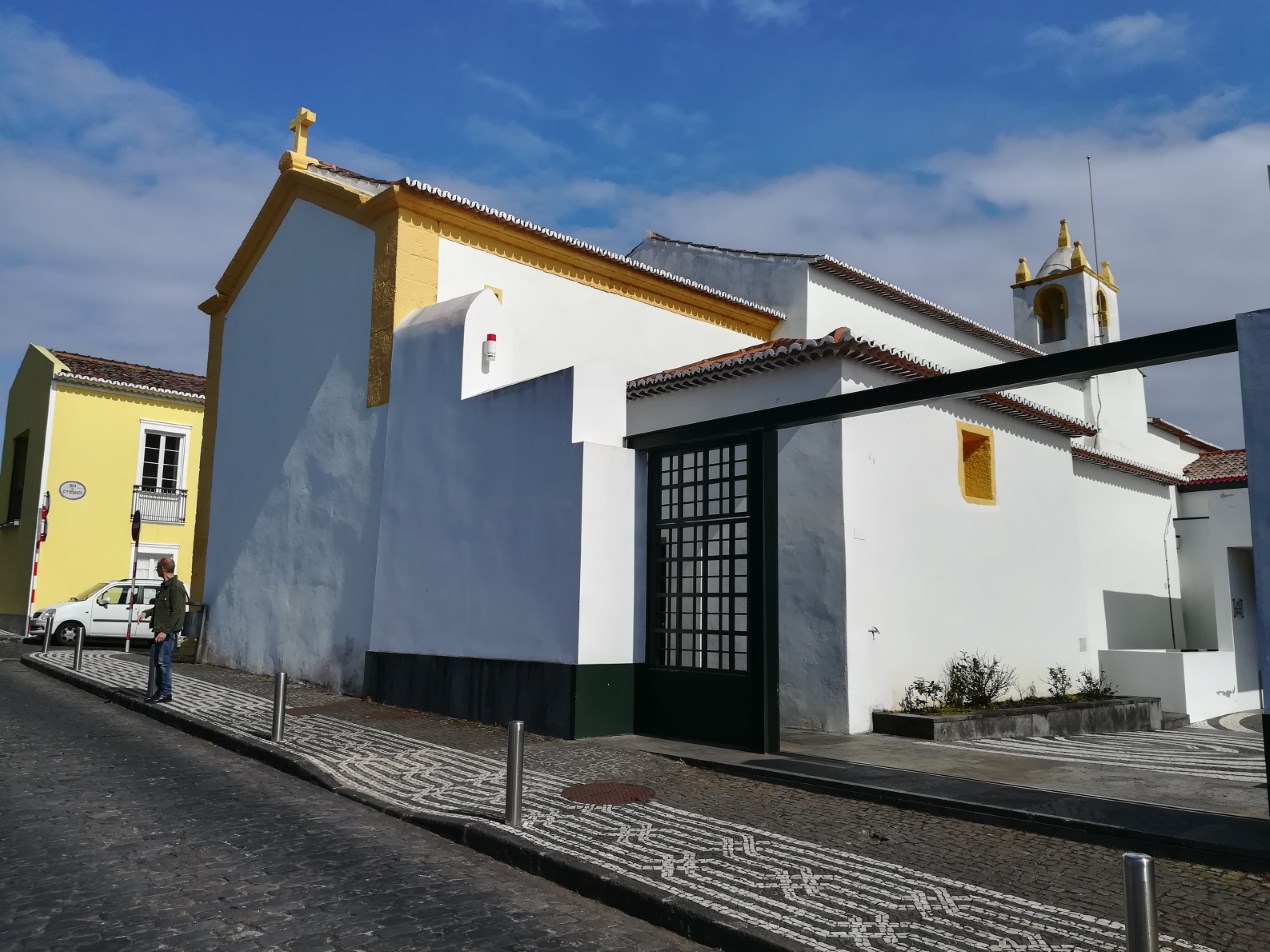

Igreja Santa Bárbara
Igreja e Recolhimento de Santa Bárbara – interessante conjunto monástico, exemplo de estrutura para recolhimento de mulheres no séc. XVII. Planta octogonal e coberta por abóbada. No interior, um pequeno pátio, e divisões com fornos de cozer pão.

The Church of Santa Barbara is an interesting monastic complex, an example of the structures used for harbouring women during the 17th century. The dome cover was built in an octagonal shaped design. A small patio in the centre of the structure is surrounded by small partitions used for baking bread.


Ermida de Santana
Ermida de Recolhimento de Sant’Ana – gracioso elemento arquitectónico de estilo barroco de carácter popular. Do edifício de recolhimento original
só resta uma parede com janelas. A ermida foi reformada no séc. XVIII ao estilo barroco e foi acrescentada uma torre sineira.

The Chapel of Sant’Ana, “Ermida de Recolhimento Sant’Ana” – The chapel was refurbished during the 18th century in baroque style and a bell tower was added. All that remains from the original building is one wall.


Convento e Capela de Nossa Senhora da Esperança – conhecido por Convento da Esperança ou, simplesmente, Igreja do Santo Cristo, por ser local de culto ao Senhor Santo Cristo dos Milagres, padroeiro das maiores festas de cariz religioso que se realizam nos Açores. A 23 de Abril de 1540 as freiras deixaram o convento da Caloura trazendo a Imagem do Senhor Santo Cristo, e vieram habitar o Mosteiro da Esperança cuja construção foi iniciada em vida do seu fundador, o Capitão Donatário Rui Gonçalves da Câmara que, depois do terramoto de 20 de Outubro de 1522, passou a residir em Ponta Delgada.
The Convent and Chapel of Our Lady of Hope, “Nossa Senhora de Esperança” generally known as “Convento de Esperança” or simply Saint Christ’s Church “Igreja do Santo Cristo”, is home to the magnificent statue of “Senhor Santo Cristo dos Milagres” Christ of Miracles, the patron of the largest religious festival in the Azores. During the month of April of the year 1540, constant pirate attacks along the coast, forced the religious order to leave its former convent in Caloura. They took with them the Christ of Miracles statue to the Esperança Monastery built by the
founder Rui Gonçalves da Câmara. During the second half of the 17th century the monastery was remodeled with famous painted tiles (by António Oliveira Bernardes) that still exist today along the lower level.


Forte de São Brás
Forte de São Brás – fortaleza renascentista (1552) desenhada pelo italiano Tommaso Benedetto. Em área ajardinada inclui monumento aos marinheiros caídos na primeira guerra mundial e um busto de Teófilo Braga, (Presidente do Governo Provisório 1910).

Construída para defesa da cidade contra os corsários tal como o Reduto da Mãe de Deus, igual e estrategicamente erigido para defesa de Ponta Delgada, hoje interessante miradouro sobre a cidade que também merece uma visita atenta.

The “Forte de São Brás”, constructed during the renaissance period (1552) was designed by the Italian Tommaso Benedetto. A monument to the sailors fallen during World War I is exhibited here in addition to a bust of Teófilo Braga, (President of the interim government of 1910). It was used to defend the city against the pirates along with the “Mãe de Deus” fortress which was also erected with the same purpose and is presently a lookout point.


Igreja de Nossa Senhora da Conceição, – construção do séc. XVIII. Decoração barroca, nos portais, janelas e capela-mor. Talha policromada no retábulo e altar-mor, com imagens do mesmo século.

O convento (Palácio da Conceição) é hoje sede de vários departamentos governamentais da Região.

Of further interest is The Church of Our Lady of the Immaculate Conception, “Nossa Senhora da Conceição”, an 18th century construction. The doorway, windows, and the main altar all exhibit signs of baroque influence. Polychrome carvings decorate the high altar, along with religious statues from the same time.

It is next to the old convent, now the Palace “Palácio da Conceição”, the seat of various government offices.


Registe a sua empresa   |   Créditos   |   Destinos   |   Notícias   |   Contactos

Website de divulgação dos Açores. Promovemos destinos, criamos grandes experiências!

CONDIÇÕES & PRIVACIDADE
Política de privacidade
O que são cookies

® DESTINAZORES 2019 BY

Logos PRR UE