
LOCAIS A VISITAR | SPOTS TO VISIT

Na praça encontra-se ainda a estátua de Gonçalo Velho Cabral, datada de 1953, homenageando aquele que terá sido o primeiro a desembarcar nas ilhas de São Miguel e Santa Maria.
The City Gates, “Portas da Cidade”, in the form of three arches, exhibits both the royal and city crest on the front and was constructed during the 18th century. It was built next to the old port and transferred to its’ present location after the construction of the new avenue. In the Gonçalo Velho Cabral Square, where the arches are located, a statue dated from 1953 is found of Gonçalo Velho Cabral. He apparently was the first to disembark on the islands of São Miguel and Santa Maria bringing people from continental Portugal.

St. Joseph’s (São José) Church – It was built in 1709. An hispano-mexican influence is seen in the sculptured religious statues, the blue and white tiles and the wood work done in Jacarandá wood, baroque style. The former Franciscan convent, once part of the church, was transformed into a hospital during the 19th century. In the 18th century a new façade was added with low sculptured relief representing the life of Saint Francis. The organ in the high (upper) choir was the most expensive musical instrument, ordered from Lisbon for the Azores, at the time. The “Nossa Sr.ª das Dores” Chapel, next to the church, was built in the 18th century, exhibiting a baroque style facade, and a neo-classic interior.
O mobiliário na sacristia é em jacarandá e os azulejos datam do séc. XVIII. Há um pequeno museu de arte sacra anexo, expondo ourivesaria e bordados a ouro sobre tapeçaria (séc. XIV) produzidos em Inglaterra, que pertenceram ao bispo de Exeter, John Grandisson. Desconhece-se a forma como estes tesouros chegaram a Ponta Delgada. No interior, destaque ainda para a existência de madeiras raras como o pau-santo.
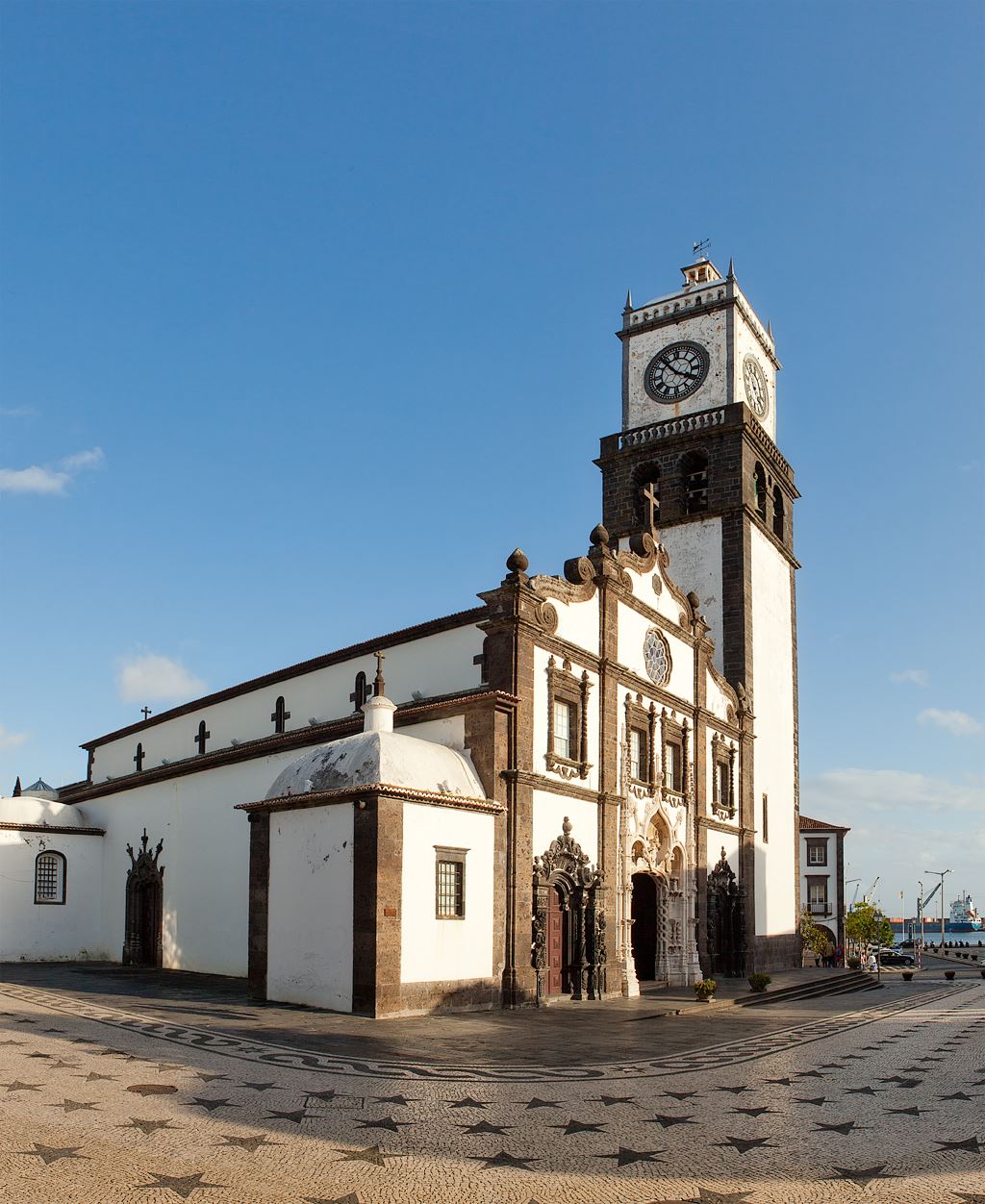
St. Sebastian’s (São Sebastião) Church – Construction was concluded in 1547 due to a vow made by the people after the plague of 1523-31. It sits on the same spot where the old St. Sebastian chapel once stood. It is Gothic in structure with a Manueline exterior. The bell tower was built
during the 17th century and the clock was added in the 19th century.
The entrance was altered in the baroque style during the 18th century. The vestry holds pieces of “jacarandá” wood and tiles from the 18th century. A small museum of religious art next to the vestry exhibits jewelry, religious artifacts and a unique piece of gold thread embroidery on tapestry (14th century) made in England, which belonged to the Bishop of Exeter, John Grandisson. It is not known how this piece arrived in Ponta Delgada.

St. Peter’s (São Pedro) Church – Statues from the 16th, 17th and 18th centuries are found here; Two statues are worthy of mention, the image
of the “Nossa Sr.ª das Dores”, one of the most extraordinary baroque sculptures of the Azores and the image of the Virgin, of Flemish origin. Do not miss the oil painting by Pedro Alexandrinho Carvalho called “Pentecostes”.

The Colégio Church was built at the end of the 16th century. The baroque façade was left unfinished by the Jesuits at the moment of their departure in 1759. It hosts a cultural extension of the Carlos Machado Museum as it is now home to a valuable collection of religious art. The former Jesuit college in now the Library and Public Archives of Ponta Delgada.
